C04 William Brade - Suite in G,
arranged for string orchestra by Patrice Connelly A$77 ($70 ex GST)
Background
William Brade was an English musician who spent much of his career after the age of 30 employed at the various courts in Germany and Denmark. Born in 1560, not a lot is known of his early life and training, but he was a violinist and viol player. He changed employers quite often, and died in Hamburg in 1630.
This Suite comes from his Newe ausserlesene Paduanen/Galliarden/Cantzonen/Allemand und Coranten ... published in Germany in 1609, and is the second suite in the book. Originally there was no key signature, as music at this time often had both modal and diatonic characteristics. In the 1600s, this music would have been played on viols or recorders or perhaps a mixture of instruments. All bowing, slurs, dynamics etc are editorial. The double bass part is the original bass viol line, with a few adjustments (octavations) to better accommodate its range.
Roughly grade 3 standard. Suitable for gifted primary school, or high school and community orchestras.
Patrice Connelly
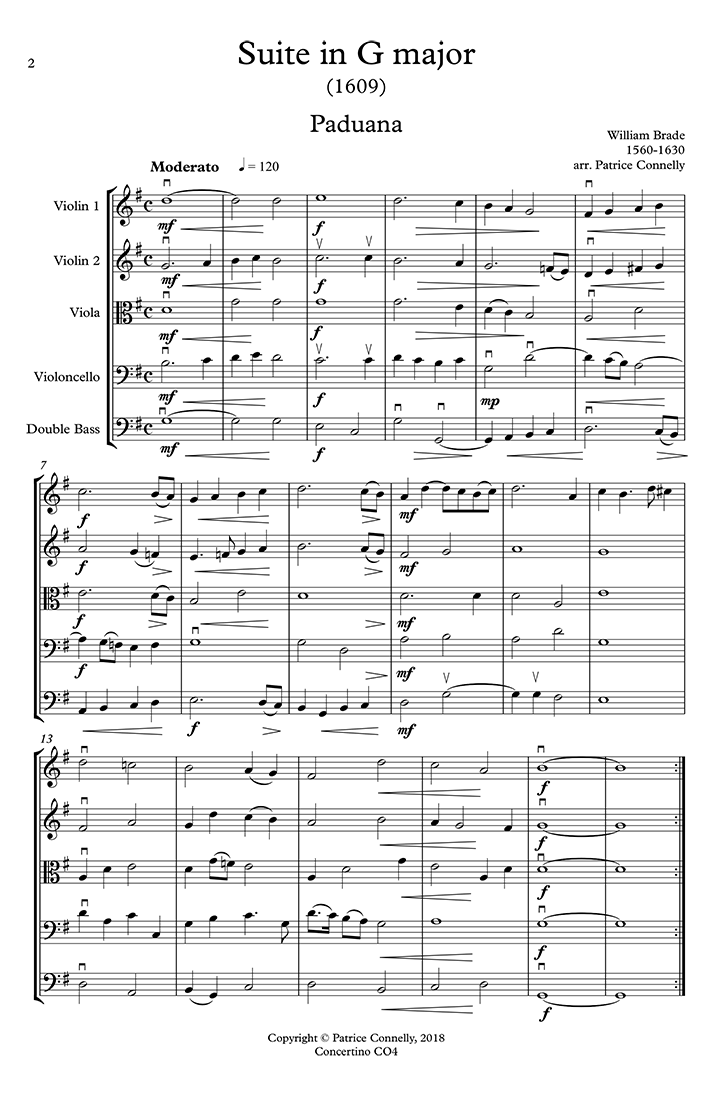
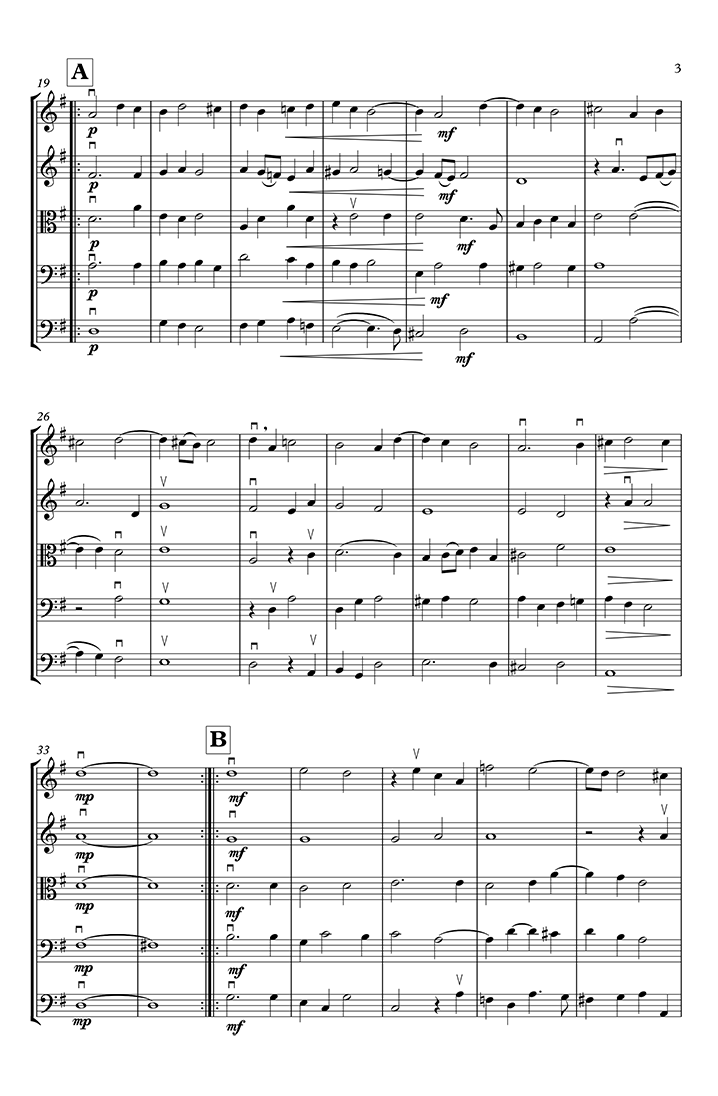

The pavan was a Renaissance pair dance, slow and stately and very common in the 16th century. It was often paired with the faster galliard, a jumping dance much favoured by Queen Elizabeth I. Many galiiards had a typical rhythm which is also to be found in God Save the Queen, but it would have been performed at a faster speed than the anthem. There are also frequent hemiolas in at least one strain of the galliard. The almain (later allemande) was a pair dance and also common in the 16th century. The movement is three steps and a hop.